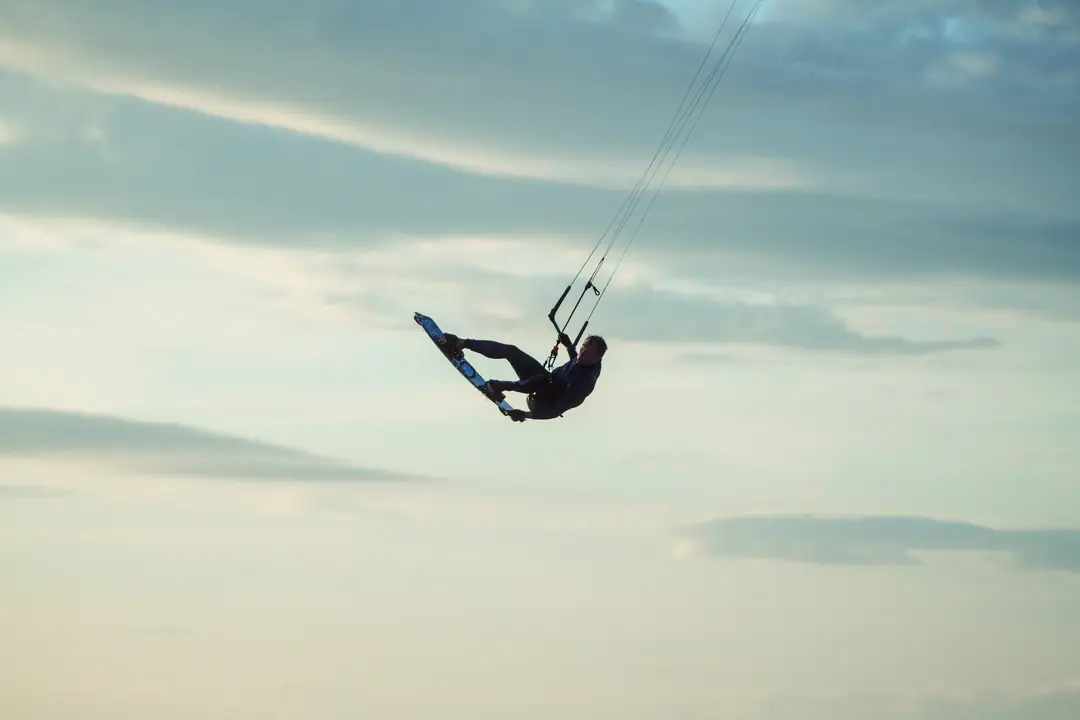
In short
Essaouira is one of the most reliable kitesurfing spots in Morocco: the trade winds blow 15 to 25 knots most afternoons from April to September, side-shore and over sand. Beginners learn at Diabat, eight minutes south of town; experienced riders head to Moulay Bouzerktoun for the wave.
The wind in Essaouira is not a pleasant surprise, it is a timetable. From April to September the trade winds get up mid-morning, build to 15 to 25 knots in the afternoon and drop at sunset, day after day. It made the town's name among windsurfers forty years ago, and it is why Essaouira is now one of the easiest places in the world to learn to kitesurf.
What's left to work out is where to ride, when to come and what it really costs. Here is what we would tell a friend who called before booking.
Why the wind is this consistent
Cool air sits over the Atlantic, hot air sits over the Moroccan interior, and air moves from the first to the second. The coastline funnels it. That is the alizé, a thermal wind — predictable to the hour rather than to the week.
Two things follow for a kiter:
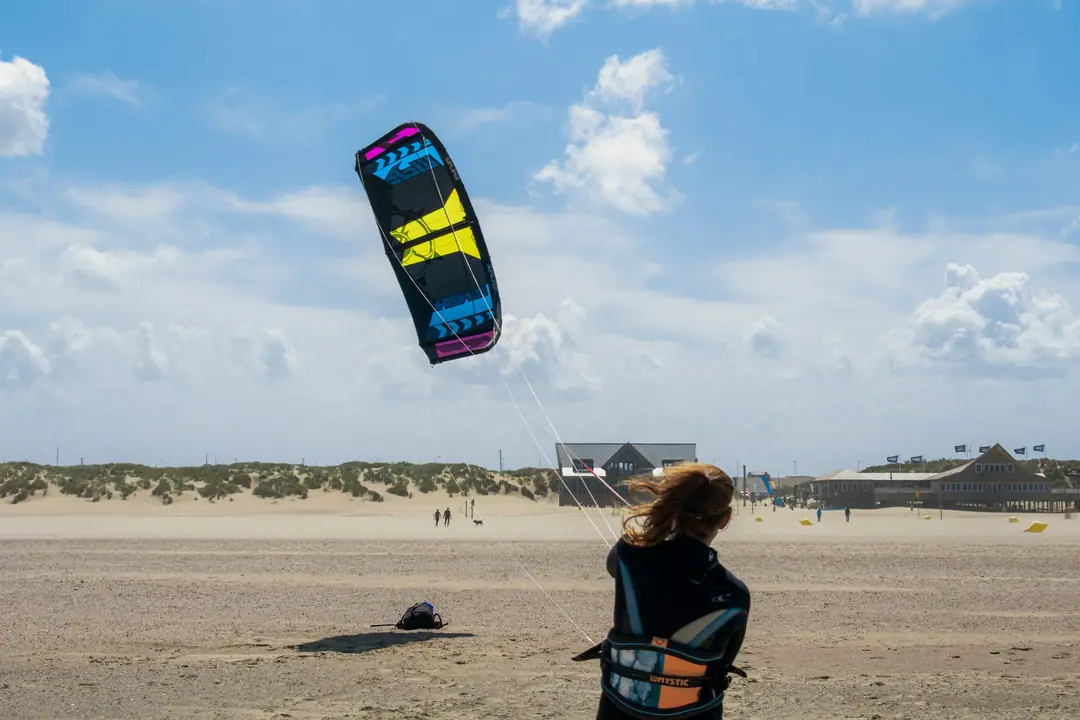
- It blows side-shore, along the beach rather than out to sea or into it. A beginner who lets go drifts parallel to the sand, not towards the horizon. That is the main safety reason this is a good place to learn.
- It arrives on schedule, usually around 11am, earlier in high summer. Mornings stay calm — that is the surfers' slot — and afternoons belong to kites.
The month-by-month detail is in our wind and weather guide to Essaouira.
The spots, easiest first
Diabat, for learning
Eight minutes south of town by road, beyond the mouth of the Oued Ksob. The beach is wide, flat and sandy, the wind is cleaner than in town, and there is almost nobody on it: no swimmers, no horses, no quads in the riding area.
This is where every serious lesson in Essaouira happens, and where your first hours should be. Schools drive you there and back.
Essaouira bay, once you are independent
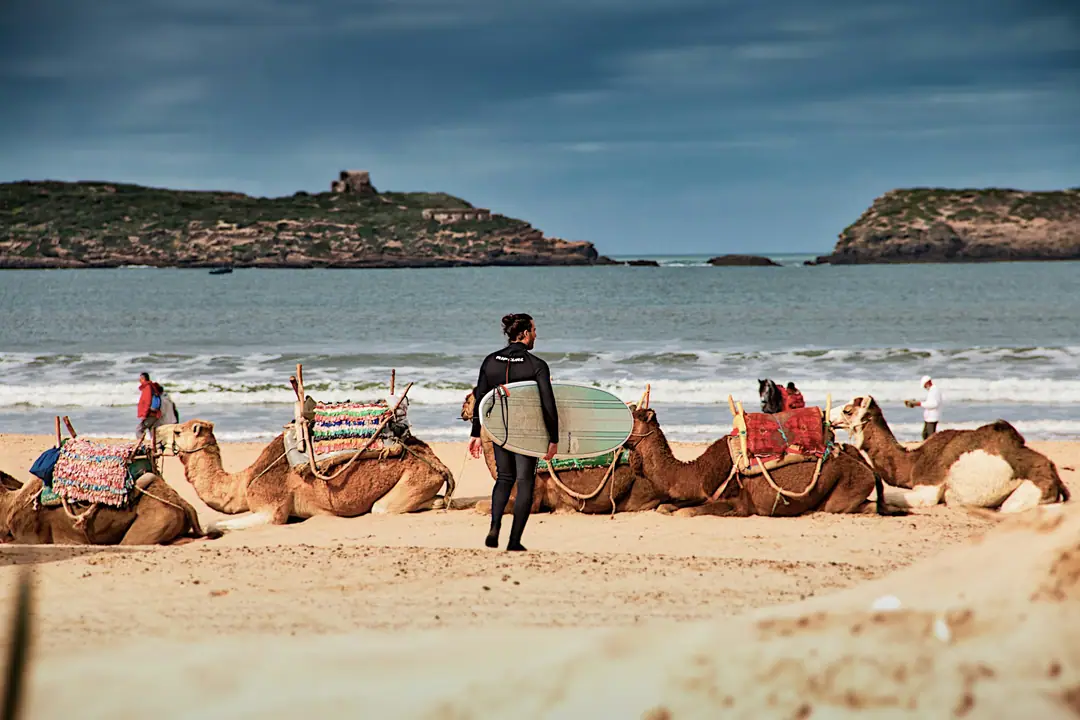
The main beach in front of town is spectacular and convenient — you walk there from your riad. But in summer it is shared with swimmers, surfers, football and camel rides, and the wind is gustier because of the buildings and Mogador island.
Fine for a quick session once you can ride upwind. Not a place to learn.
Moulay Bouzerktoun, for the wave
About twenty kilometres north. Stronger wind, short breaking swell, rocks in places: this is the region's wave spot and a windsurfing landmark. Independent riders only, and not on every day at that.
It is also the start of the classic downwinder: roughly 20 km straight south to Essaouira, run with a school, and the session most experienced visitors remember.
Sidi Kaouki, if you came to surf as well
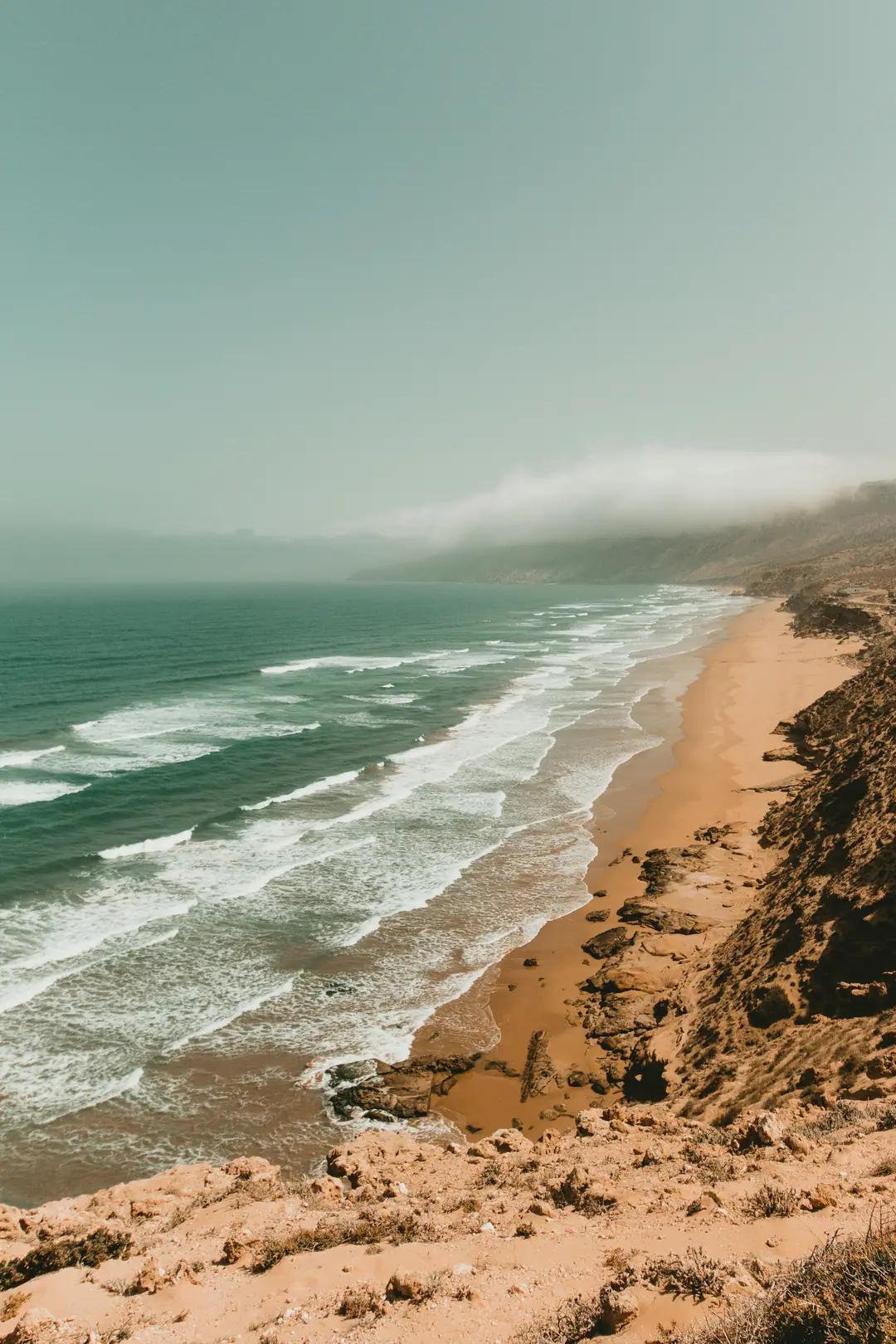
25 km south, a very exposed and wilder beach. The wind is often more onshore than at Diabat, which makes riding harder, but the wave is better. People go for the surf, with a kite in the boot just in case.
The wind month by month
| Period | What you get | Who it suits |
|---|---|---|
| April to June | 15 to 22 knots most afternoons, sea still cool | Ideal for beginners |
| July and August | 18 to 25 knots, the windiest days of the year, town full | Experienced riders; beginners in the morning |
| September and October | Still regular wind, warmest sea of the year, fewer people | The best compromise |
| November to March | Irregular windy days between Atlantic fronts | Flexible riders, longer stays |
In short: for a trip built around kitesurfing, aim for May, June or September. You get the summer wind without August's prices and crowds.
Learning: how long, how much
Learning always follows the same steps: flying the kite on the beach, then in shallow water, then body-dragging, then the waterstart. Most students body-drag in their first session and get up on the board after six to nine hours on the water, which is three to five lessons spread over a few days.
That matters for planning a trip: kitesurfing is not learned in one session. Allow three days minimum, ideally a week if you want to leave riding your first stretches.
On budget, expect €65 for a two-hour group lesson with gear and transport included, €90 semi-private and €110 private. Packages of up to ten hours lower the hourly rate — ten private hours cost €490 instead of €550.
Four questions to ask before you pay, whichever school you choose:
- Is the instructor IKO-certified?
- How many students per instructor? Three or four is right. Six is a queue.
- Are the kite, board, harness, helmet, vest and wetsuit included — and transport to the spot?
- Which beach do you teach on? If the answer is "in front of town" in mid-August, look elsewhere.
Gear: what to plan for
For a 70 to 80 kg rider:
- 9 m: the do-everything kite for a summer afternoon.
- 12 m: mornings, spring, and light days.
- 7 m: days of 25 knots and more, common in July and August.
A 3/2 is enough from May to November, a 4/3 is more comfortable in winter; the sea stays between 17 and 21°C all year. Add sunglasses on a strap and water-resistant sunscreen: the sand and salt here are serious.
Bringing your own gear only makes sense for a long stay. Local shops have kites from 7 to 12 m, which avoids baggage fees and airport surprises.
Experienced riders: coaching and downwinders
If you already ride, the point of Essaouira is not learning but progressing quickly, because the wind gives you sessions every day rather than one weekend in three. Two things are worth the trip: video coaching to unlock jumps and transitions, and the Moulay Bouzerktoun downwinder.
With children
Lessons usually start at age 12, and the deciding factor is weight rather than age: you have to be able to hold the kite down. For younger children the Essaouira pattern is simple — surfing in the bay in the morning, kites in the afternoon for the parents. That is the town's natural rhythm anyway.
Common mistakes
- Booking a single lesson. Two hours is enough to love it, not to ride.
- Coming in August to learn. The afternoon wind is too strong for a first lesson, and the town is full.
- Choosing a school on price alone. The gap between €55 and €65 doesn't show on the bill, it shows in the number of students per instructor.
- Forgetting the wind shapes the day. Medina, port and terraces are for mornings and evenings. Afternoons are for riding.
- Underestimating the sun. It is 24°C with 20 knots of wind: you don't feel yourself burning.
Where to stay for the spot
Town is still the best base: schools shuttle you to Diabat and you sleep five minutes from dinner. Staying in Diabat itself only makes sense for a long, independent trip with a car.
Our area-by-area picks are here: where to stay in Essaouira.
Kitesurf holidays
For a week built entirely around kiting — daily lessons, gear, transfers to whichever spot the wind favours — weekly packages work out cheaper than lessons bought one at a time.
Common questions
Is Essaouira a good place to learn to kitesurf?
Yes, one of the best in Morocco for beginners. The wind is thermal, so it is predictable; it blows side-shore, meaning you drift along the beach rather than out to sea; the bottom is sand; and there is plenty of room. Lessons take place at Diabat, eight minutes south of town, on a wide beach with no rocks.
When is the best time to kitesurf in Essaouira?
April to September, with wind over 15 knots most afternoons and a peak in July and August. May, June and September are the sweet spot: wind almost every day, fewer people than high summer, and the warmest sea at the end of the season.
What kite size do I need in Essaouira?
For 70 to 80 kg: a 9 m covers most summer afternoons, a 12 m is for mornings and lighter spring days, and a 7 m for days of 25 knots and more. Local rental shops stock kites from 7 to 12 m, which saves you travelling with your own.
Do I need a wetsuit to kitesurf in Essaouira?
Yes, all year. The sea stays between 17 and 21°C: a 3/2 is enough from May to November, a 4/3 is more comfortable in winter. Schools include it along with a helmet and impact vest.
Can you kitesurf in Essaouira bay itself?
You can, but it is not the place to learn. The main beach is shared with swimmers, surfers, football games and horses, and the wind is gustier there because of the town and Mogador island. That is why schools take their students to Diabat.
Where do experienced riders go?
Moulay Bouzerktoun, about twenty kilometres north, is the region's wave spot: stronger wind, short steep swell and rocks in places, for independent riders only. The classic downwinder starts there and finishes in Essaouira, roughly 20 km to the south.
How much does a kitesurf lesson cost in Essaouira?
From €65 for two hours in a group, with all the gear and transport to the spot included; €90 semi-private and €110 private. Plan on a package of six to ten hours rather than a single lesson, because that is what it takes to get up on the board.