In short
For the essential Essaouira meal, pick your fish at the port grills and agree the price by weight before it is cooked. For everything else, eat in the medina where the menu is short, the prices are written down and Moroccans are eating.
Essaouira eats better than a town this size has any right to. It is a working fishing port, it sits in the middle of the argan belt, and it has had enough foreign residents for long enough that there is real range without the food becoming a tourist performance.
Here is how it actually works.
The port grills
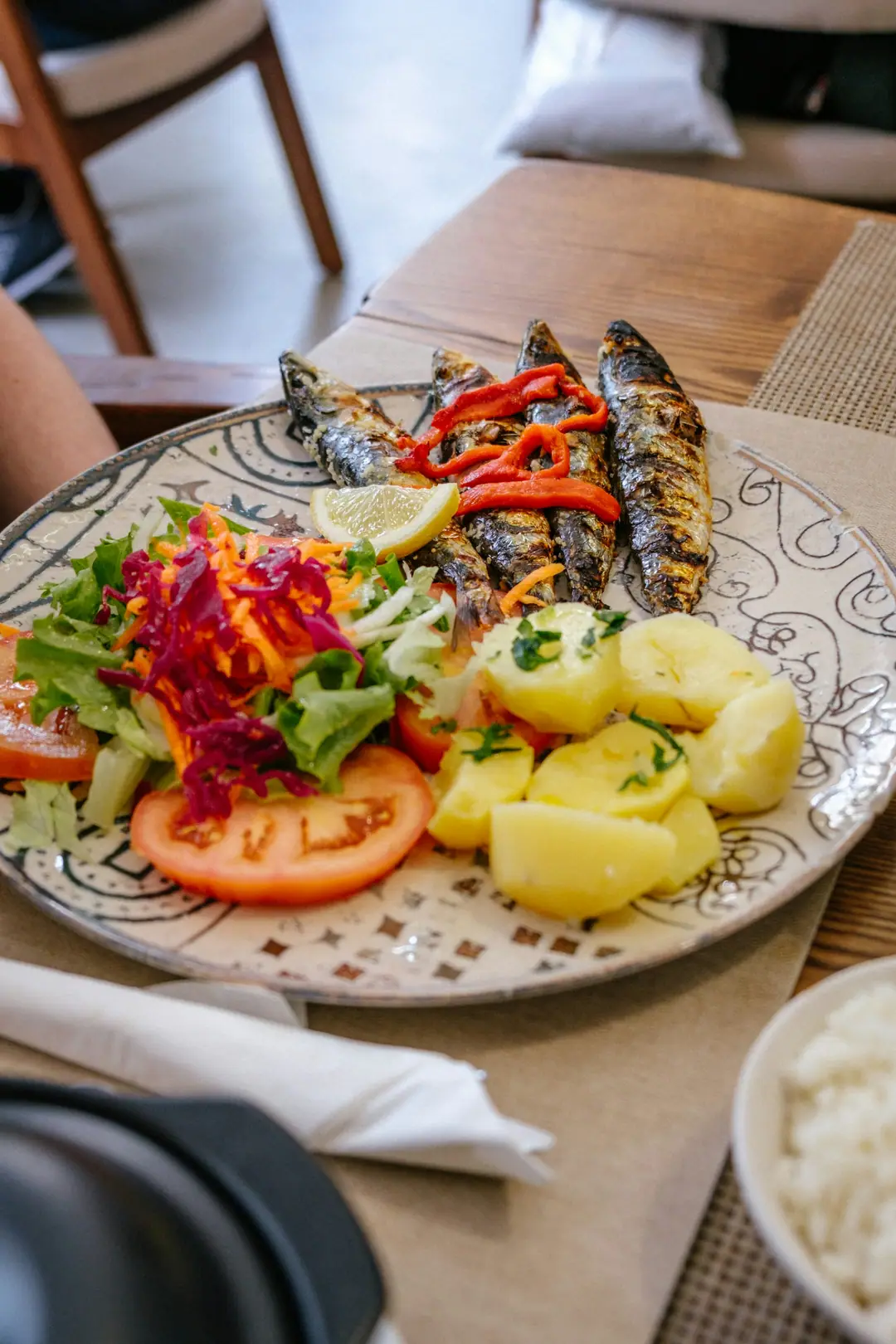
At the end of the port, past the boats, there is a row of grill stalls. You walk along, look at what was landed that morning, pick what you want, and they weigh it, grill it and serve it with bread and salad at a plastic table.
This is one of the genuinely great cheap meals in Morocco and you should do it at least once.
Two rules. First, agree the price by weight before anything is cooked, and be specific about quantity — this is where the occasional visitor gets a surprise bill. Second, choose the stall with local customers eating at it rather than the one with the most enthusiastic person waving you over.
Sardines are the thing here. They are landed in enormous quantities, they are cheap, and grilled over charcoal within hours of coming out of the water they are better than any sardine you have had elsewhere.
The medina restaurants
Inside the walls the range runs from tiny places serving one tagine to properly good cooking in restored riads.
What to look for: a short menu, because it means things are cooked fresh; a room with Moroccan customers in it; and prices written down. What to be sceptical of: laminated photo menus in six languages, and anyone standing outside inviting you in.
Order the fish here too — it is the same catch as the port, cooked more carefully. Chermoula, the marinade of coriander, cumin, garlic, paprika and preserved lemon, is the local treatment and it is excellent on almost anything.
The rooftops
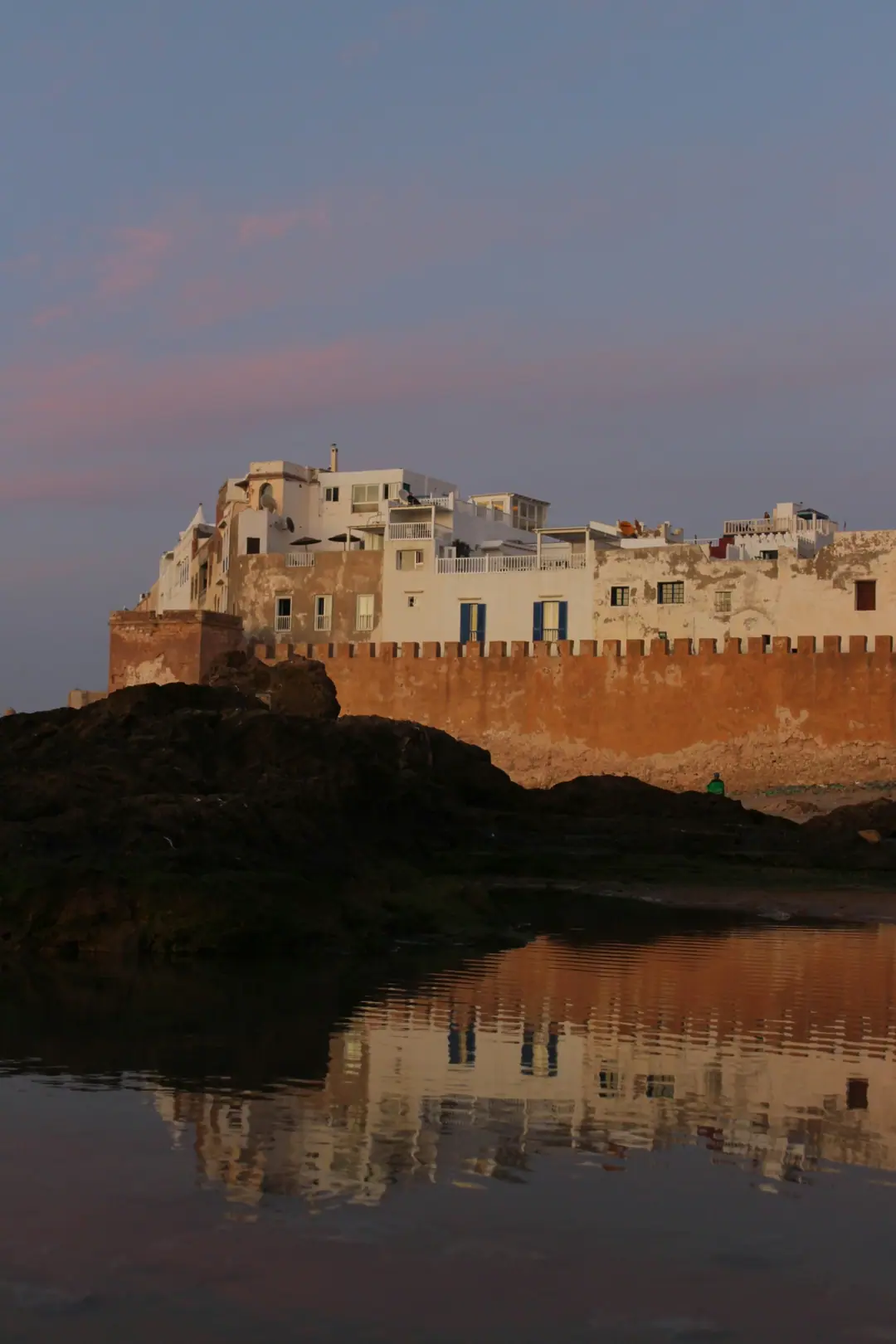
Essaouira's rooftops are a real thing rather than a marketing angle, because the town is low, white and on the sea, so a third floor gets you the whole medina, the ramparts and the Atlantic.
You pay for the view. A mint tea on a rooftop costs several times what it costs at street level, and the food is often merely fine. Do it anyway, once, at the end of an afternoon, for the light. Just do not plan your best meal around it.
Our addresses, by occasion
The names we get asked about most, and what we go to each one for. No ranking and no stars: a place is good for a particular evening, not in the abstract.
One honest caveat: in Essaouira a place can close for a season, change cook or move one lane over. Check the opening hours on the day, especially between November and February.
| Place | Why go | Price |
|---|---|---|
| The port grill stalls — end of the quay | That morning's fish, grilled in front of you | € |
| Chez Sam — right at the end of the port | Fish and shellfish in a boat-shaped dining room, an institution | €€ |
| La Table by Madada — medina, port side | The celebration meal: fish done properly, careful service | €€€ |
| Umia — medina | A short menu that changes, Moroccan cooking reworked | €€€ |
| Elizir — medina | Italian-Moroccan cooking in a room of 1960s finds | €€ |
| Triskala — medina, against the ramparts | Vegetarian, fish of the day, a handful of tables: book | €€ |
| Ferdaous — medina | A tagine like someone's mother makes, short menu | €€ |
| Taros — Place Moulay Hassan | The terrace at sunset, more than the plate | €€ |
| Ocean Vagabond — on the beach | Breakfast or lunch with your feet in the sand, between sessions | €€ |
| Chez Driss — medina, near the square | The morning pastry counter, open since 1928 | € |
| La Fromagerie — Ghazoua road | Farm goat's cheese and lunch in the green, if you have a car | €€ |
Two habits beat any ranking: look at who is eating in the room, and ask for the menu before you sit down. A place that hesitates to show its prices has told you everything.
What a meal costs
Per person, drinks excluded, as an order of magnitude rather than a promise.
| Meal | Per person |
|---|---|
| Msemen and tea at a morning counter | a few dirhams |
| Bowl of bissara | around 10 MAD |
| Tagine in a neighbourhood cafe | 40 to 60 MAD |
| Plate of grilled sardines at the port | 50 to 80 MAD |
| Fish by weight at the port (bream, sole) | 100 to 200 MAD depending on size |
| Dinner at a good medina restaurant | 200 to 350 MAD |
| Tasting-menu restaurant, full menu | from 400 MAD |
| Mint tea on a rooftop | 25 to 40 MAD |
Three things worth knowing before you reach for your wallet:
- Many small places take cash only. Carry small notes: at the port and in the markets, nobody has change for a big one.
- Tipping isn't compulsory but it is normal: round up, or leave about 10% in a sit-down restaurant.
- Check whether water, bread and olives are charged. It is normal and small, but better known than discovered.
Where locals eat
Two things fill the gap between the port and the restaurants.
The breakfast and snack stands. Msemen, the flaky folded flatbread, and harcha, the semolina griddle cake, sold from carts and hole-in-the-wall counters in the morning with honey or amlou. This is what the town actually eats at 8am. Add a bowl of bissara — thick fava bean soup with olive oil and cumin — in winter.
The juice stalls. Fresh orange juice, pressed in front of you, for small change. Essaouira is surrounded by citrus and the juice is superb.
Then there is the outdoor market inside Bab Doukkala: the spice sellers, the preserved lemons and olives by the bucket, the dried fruit, and the fish and vegetable halls. Even if you are not cooking, it is the best hour you will spend understanding what people here eat.
Argan and amlou
You are in the argan capital of the world and it is worth taking seriously. Culinary argan oil — roasted, nutty, quite different from the cosmetic kind — goes on bread and into tagines. Amlou, the spread of argan oil, ground almonds and honey, is the region's great contribution to breakfast.
Buy it from a women's cooperative rather than a medina souvenir shop. The cooperatives on the Ounagha and Had Dra roads sell the real thing at a fair price, and much of what is sold as argan oil in tourist shops is cut with other oils.
A practical note on timings
Lunch runs late, roughly 13:00 to 15:00, and dinner later still, from about 20:00. Many medina places close between those services. During Ramadan the daytime rhythm changes completely and the evening comes alive after sunset — restaurants adapt for visitors, but check hours rather than assuming.
Common questions
What food is Essaouira known for?
Fish, above all — sardines, sea bream, sole, calamari and prawns landed at the port each morning. Beyond that, tagines cooked with local argan oil and amlou, a spread of argan oil, almonds and honey that is the regional speciality.
How much should a meal cost in Essaouira?
A plate of grilled fish and salad at the port stalls or a tagine at a neighbourhood cafe is a genuinely cheap meal. A sit-down dinner at a mid-range medina restaurant costs several times that, and the rooftop places with a view charge a premium on top. All three are worth doing once.
Is the fish at Essaouira port safe to eat?
Yes, and it is landed that morning. Pick a stall that is busy, agree the price by weight before they cook it, and check the total against what you agreed. The fish itself is excellent.
Are there vegetarian and vegan options in Essaouira?
Plenty, and more than in most Moroccan towns. Vegetable tagines, Moroccan salads, lentil and bean dishes are everyday food here rather than special requests, and several medina restaurants run fully vegetarian menus.