In short
This free, self-guided route takes about two hours, from Bab Doukkala through the mellah and the Skala de la Ville down to the port. Start around 4pm and you finish at the harbour for sunset.
The other Essaouira guides sell you a walking tour as a PDF. Here is ours, in full, for nothing.
The route takes about two hours, runs roughly two and a half kilometres, and is ordered so the town's history unfolds in the order it happened rather than in the order the streets happen to run. Start at around 16:00 and you will finish at the port for sunset.
1. Bab Doukkala and the outdoor market
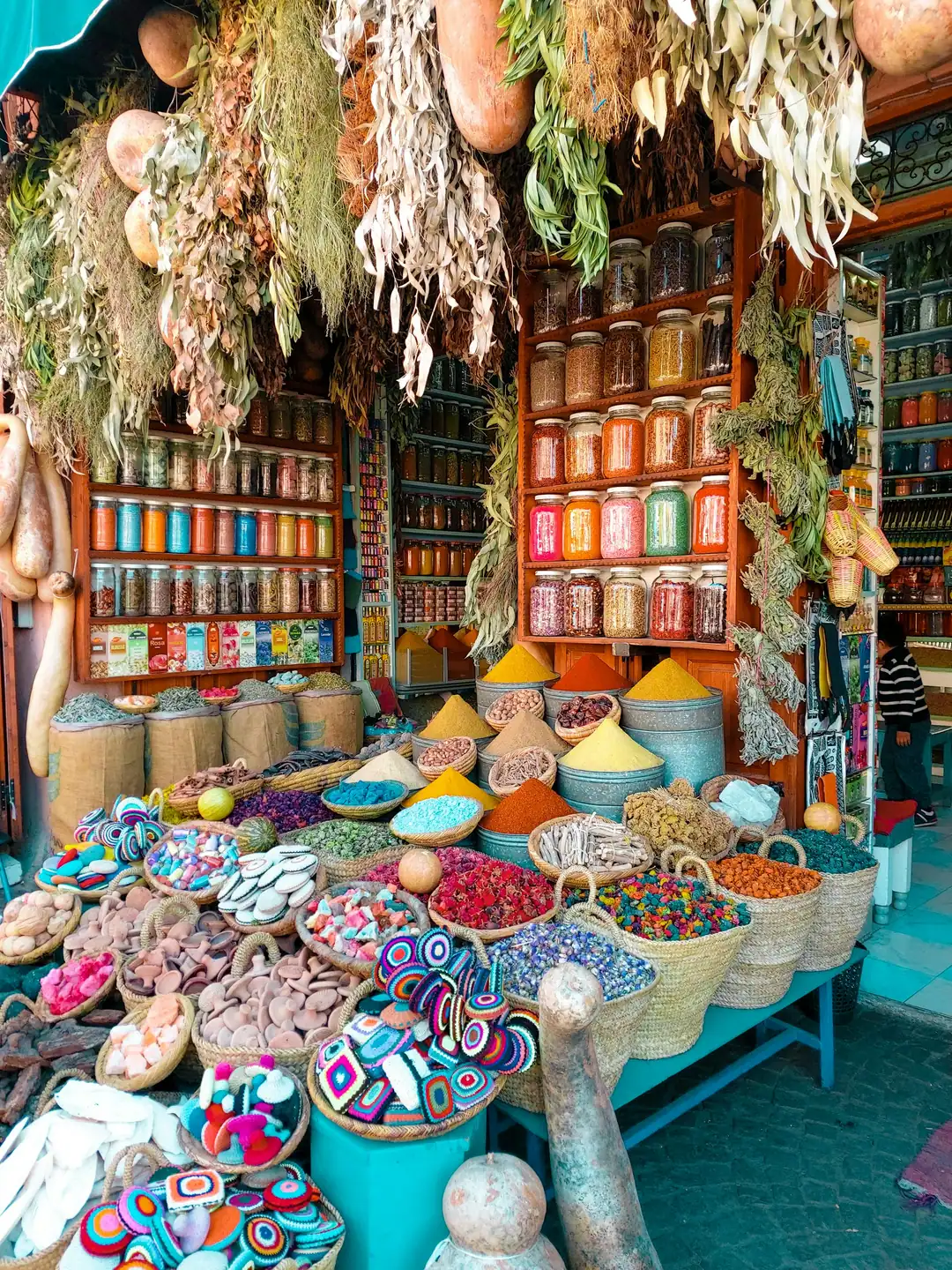
Start at the main landward gate. This is where the town met the countryside, and it still does: the market just inside is where people actually shop — spice sellers, preserved lemons and olives by the bucket, dried fruit, and the fish and vegetable halls.
Walk in through the gate and give yourself fifteen minutes here before the tourist medina starts. It is the most honest part of the walk.
2. Avenue Mohammed Zerktouni, the spine
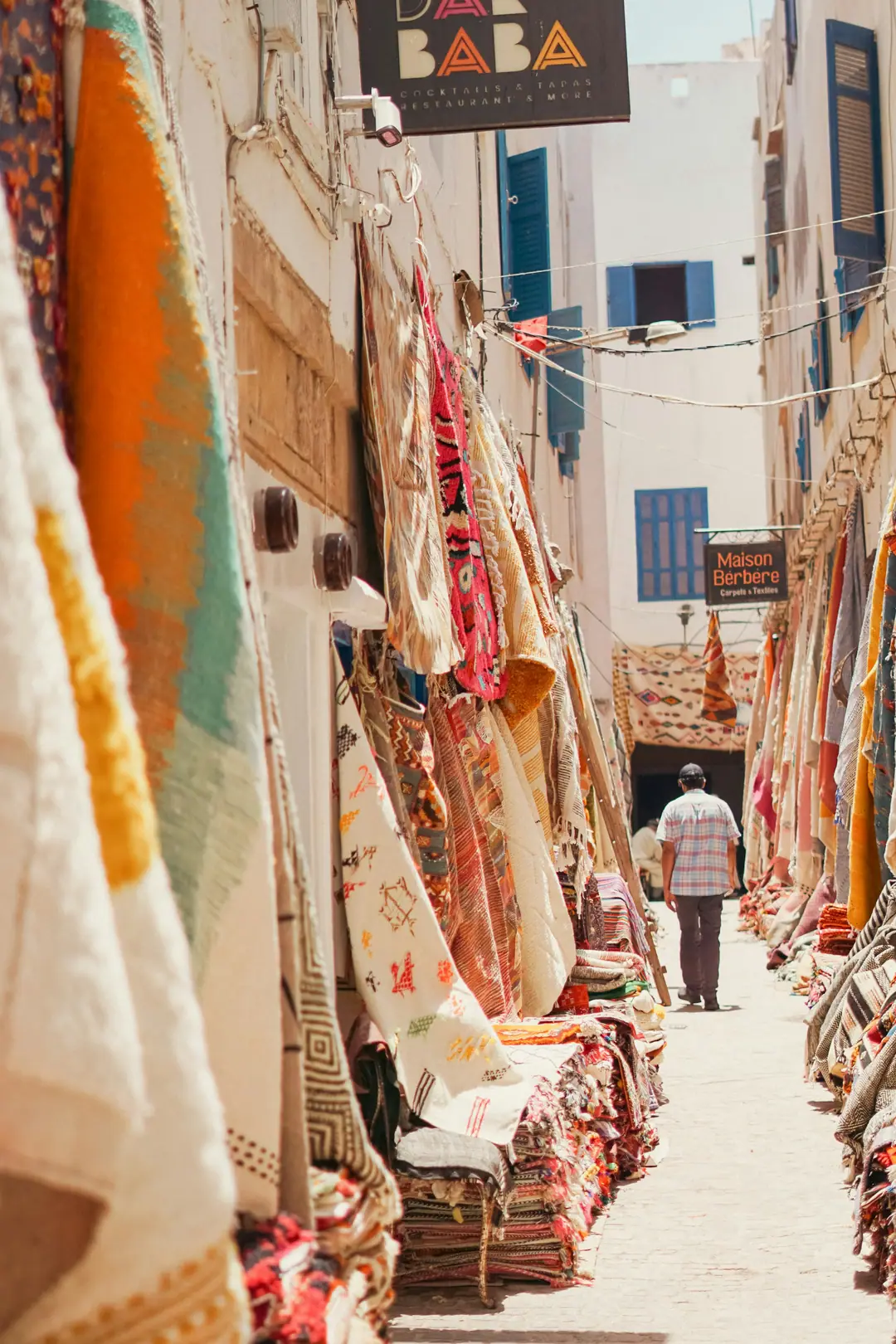
From Bab Doukkala the main street runs straight through the medina. Notice that it is straight.
This is the thing that makes Essaouira unusual among Moroccan medinas. It was not built organically over centuries — it was commissioned in the 1760s by Sultan Sidi Mohammed ben Abdallah and laid out to a European grid plan, reportedly by a French engineer, to create a controlled port through which the sultan could funnel trade. Every other medina in Morocco grew. This one was designed.
3. The mellah
Turn north into the old Jewish quarter. For much of the 18th and 19th centuries Essaouira had one of the largest Jewish communities in Morocco, and the merchant families here — the tujjar as-sultan, the sultan's traders — ran much of the commerce between Morocco and Europe.
The quarter is quiet now and parts are in poor repair, with restoration work ongoing. Walk slowly and look up: the doorways, the upper-floor windows and the occasional Hebrew inscription are the visible remains of a community that shaped this town as much as anyone.
4. The Skala de la Ville
Come back west to the sea wall and climb up onto the Skala de la Ville. This is the wide artillery platform facing the Atlantic, lined with brass cannons — many of them European, several of them gifts to the sultan from merchant states.
The waves break directly against the wall below. It is the best view in Essaouira and the one place everybody photographs. If you have seen a picture of Essaouira that was not of a blue boat, it was taken here.
Underneath the platform, the arched galleries built into the ramparts house the thuya wood workshops. Walk in. The marquetry — inlaid boxes, tables and panels made from thuya root — is a real craft tradition that has been practised here for generations, and the workshops are working premises rather than showrooms.
5. Place Moulay Hassan
Down into the main square, which is the hinge of the town: medina on one side, port on the other, cafés along the edges. Sit down, order a mint tea, and watch for ten minutes. This is where Essaouira does its people-watching, and it costs the price of a drink.
6. The port and the Skala du Port
Through the archway to the harbour. This is a working fishing port, not a restored one: blue wooden boats in various states of repair, nets being mended, gulls behaving badly, and the auction sheds.
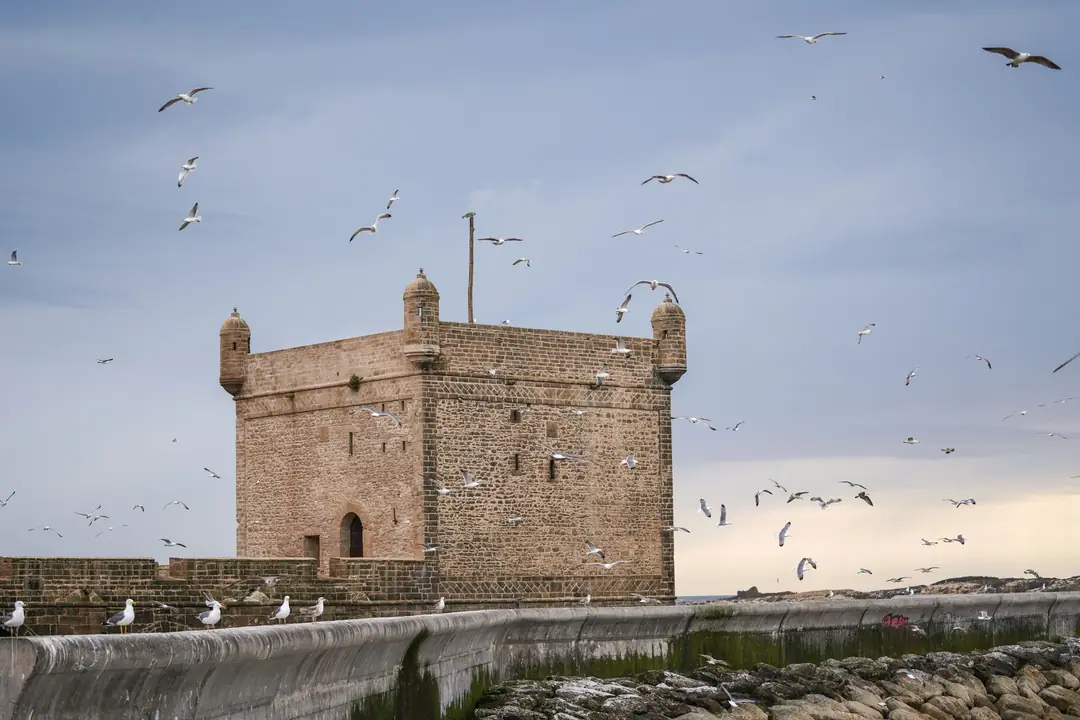
Climb the Skala du Port — the square bastion at the entrance — for the view back over the boats to the medina walls. There is a small entry fee, and it is the single best photograph in town, particularly in the last hour of light.
At the far end of the quay, the grill stalls cook whatever came in that morning. If you have timed this right, this is dinner.
7. The beach, if there is light left
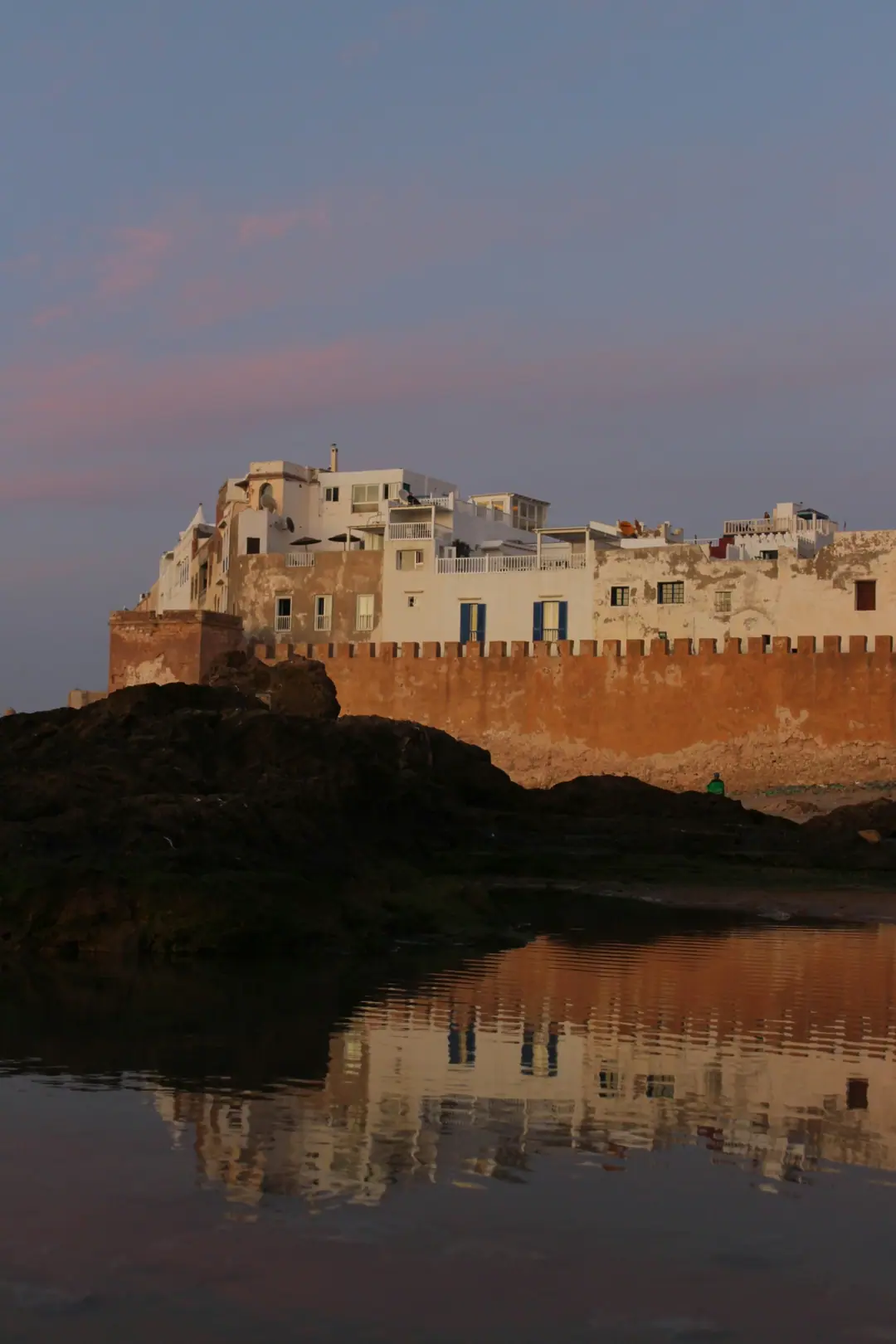
Come out of the port and the bay opens south in a long curve. If the wind has dropped and the sun is still up, walk out along the sand for twenty minutes and look back at the ramparts. That view is why people extend their stay.
Practical notes
Wear something windproof. The rampart sections are fully exposed and the wind is strongest in the afternoon.
You will be offered guiding services around the port and the main square. The medina is a grid and this route is written down, so you do not need one; a firm, polite no and continuing to walk is enough. If you do want the history properly, book a licensed guide in advance rather than accepting one in the street.
Nothing on this route costs money except the Skala du Port entry, your mint tea, and whatever you buy in the workshops.
Common questions
How long does it take to walk around Essaouira medina?
The full circuit in this guide takes about two hours at a relaxed pace, longer if you stop in workshops or for tea. The medina itself is small enough to cross end to end in fifteen minutes.
Do you need a guide in Essaouira?
No. The medina is laid out on a grid and is easy to navigate alone, which is why this self-guided route works. A licensed guide is worth it for the history rather than the navigation — there is a lot here that is invisible without explanation.
Is Essaouira medina free to enter?
Yes. The medina, the ramparts at the Skala de la Ville and the port area are free to walk. Some individual sites and museums charge a small entry fee.
What is the best time of day for the Essaouira walking tour?
Start around 16:00. You get the souks while they are busy, the ramparts in the best light, and you finish at the port at sunset. In summer this also avoids the hottest and windiest part of the day on the exposed sections.